If you search "how to build a teenager's confidence," you'll get the same advice over and over. Praise the effort, not the outcome. Love unconditionally. Encourage hobbies. Model self-compassion.
None of it is wrong. All of it is incomplete.
I've spent over 30 years watching teenagers walk into my school as one person and walk out as someone else entirely. The shy girl who wouldn't look anyone in the eye. The angry boy who'd already been written off by three schools. The high-achiever who was secretly terrified she wasn't good enough. I've seen what actually moves the needle on a teen's confidence, and it's almost never what the parenting articles say.
So let me tell you what I've actually seen work.
Confidence Isn't Given. It's Earned.
Here's the thing every parent of a teen needs to hear: you can't build your kid's confidence. You can only build the environment where they build it themselves.
I've seen parents try to confidence-pep-talk their teens into believing in themselves. "You're amazing. You're smart. You can do anything." The teen nods, says thanks, and goes back to feeling exactly the same way they did before.
Why doesn't it work? Because real confidence isn't a feeling someone gives you. It's a memory you give yourself.
It's the memory of trying something you weren't sure you could do, and discovering you could. That memory is the only thing the brain trusts. Words from a parent don't override it. Words from a parent can't create it.
Researchers at BYU have tracked 500 families over a decade in what they call the Flourishing Families Study, and one of the lead researchers, Laura Padilla-Walker, puts it bluntly: parents need to let teens struggle a little longer than is comfortable. Stepping in too fast doesn't protect their confidence. It robs them of the chance to build it.
The Hidden Skill Underneath Confidence
Most parents think confidence is the goal. It isn't. Confidence is the byproduct.
The actual skill underneath it is something quieter: the ability to do hard things on purpose.
When a teen voluntarily walks into something difficult, struggles, stays in the struggle, and comes out the other side, their brain logs a new piece of evidence: I can handle this. Do that enough times across enough different situations, and the brain starts to generalize. I can probably handle the next thing too. That generalization is what confidence actually is.
You can't give this to your teen. You can only put them in situations where it becomes possible.
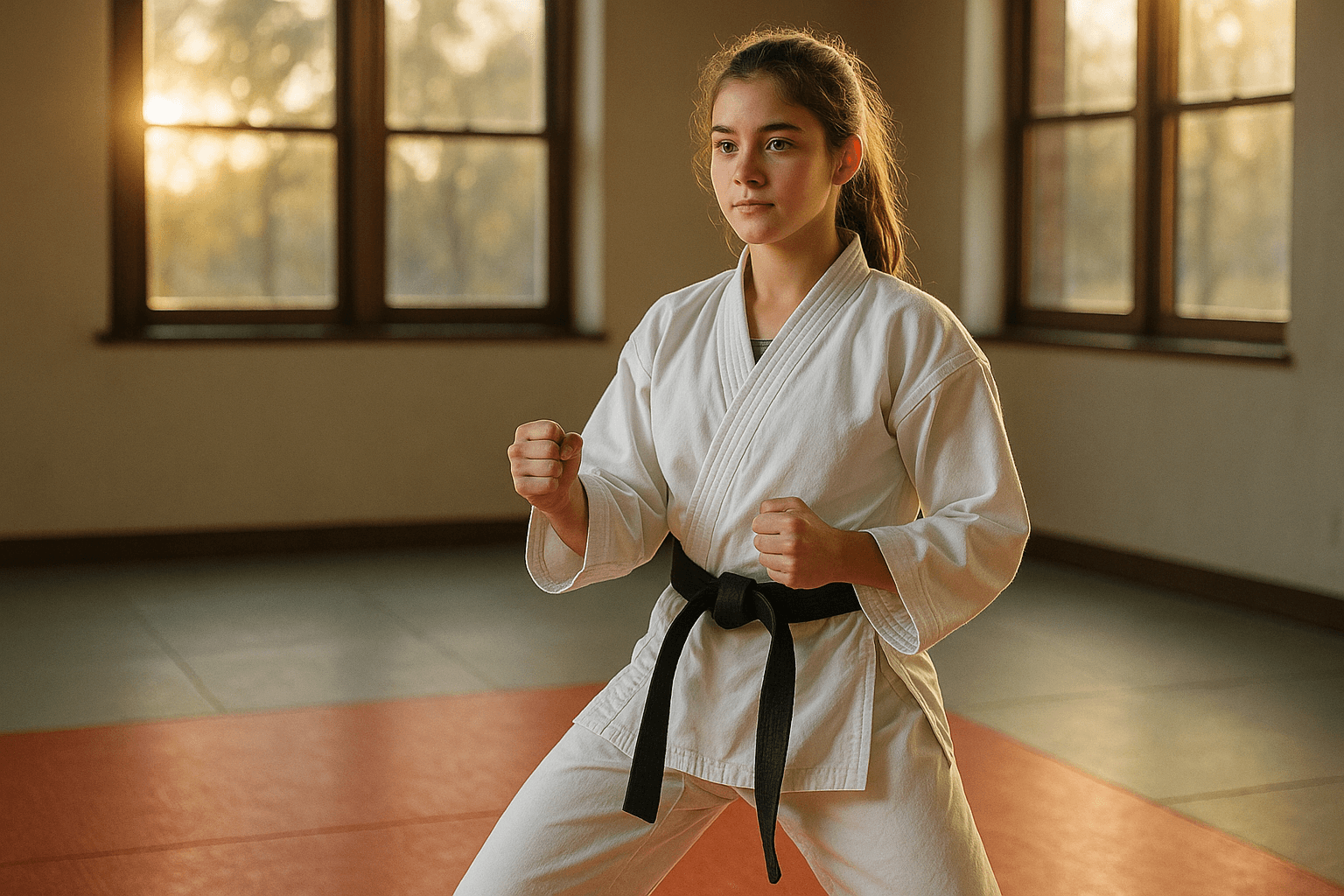
This is why a teenager who survives a tough sports season, a demanding music recital, a first job they almost quit, a martial arts test they nearly failed, comes out walking different. Not because anyone told them they were great. Because they have new evidence about themselves, and the evidence outranks the doubt.
What Parents Get Wrong
In 30 years of working with parents, I've seen four patterns that quietly drain teen confidence. Most parents do these out of love. That doesn't make them less damaging.
They rescue too fast. The teen forgets the science project at home. Mom drives it to school. The teen has a conflict with a teacher. Dad sends the email. Every time you solve their problem, you tell their brain: you can't handle this without me.
They praise the wrong things. "You're so smart." "You're a natural." This kind of praise ties identity to talent, and talent runs out the moment the work gets hard. Praise what they did, not what they are. "You stayed with that for two hours when you wanted to quit. That's who you're becoming."
They protect them from boredom and discomfort. A teen who's never had to sit with frustration doesn't know they can. The discomfort of struggle is where the confidence gets made. If you sand off every rough edge of their day, they have nothing to push against.
They make it about themselves. "I just want you to be happy." "I just want what's best for you." Read between those lines and the teen hears: my feelings depend on yours. That's a heavy thing to put on a kid still figuring out who they are.
The Three Things That Actually Work
Strip away the advice that doesn't move the needle, and three things remain.
One: Put them in front of a challenge they didn't choose, with support but not rescue. This is why activities outside the home, sports, martial arts, a part-time job, theater, a band, do more than anything you can do at the kitchen table. Someone other than you is asking them to step up. You can't do that work for them, and they know it.
Two: Let them watch you be uncertain and keep going. Teens learn how to handle hard things by watching adults handle hard things. If you only let them see your confident, finished self, they think confidence means never being scared. If you let them see you take on something you're not sure of and stay in it, they learn what confidence actually looks like.
Three: Believe in them out loud, specifically, and only when you mean it. Generic praise gets ignored. Specific belief gets remembered. "I saw how you handled that conversation with your coach. That took guts." That's a sentence your teen will hold onto for a decade.
What Confidence Really Is
Here's what I tell every parent who walks into my school worried about their teen.
Your kid doesn't need more praise. They don't need more protection. They don't need you to fix the world so it stops being hard.
They need someone, you, a coach, a teacher, a mentor, who sees who they could be, puts a real challenge in front of them, and refuses to do the work for them. Then steps back and watches them surprise themselves.
That's how it has worked for 30 years. That's how it works now. The kid you're worried about already has everything they need to become confident. Your job isn't to give it to them. Your job is to stop blocking it.
The most powerful sentence you can say to a teenager isn't "you're amazing." It's "I think you can handle this. Let's find out."
If you're ready for a mentor who sees what's possible in your teen and won't let them settle for less than they're capable of becoming, let's talk. Learn more about my work as a speaker, author, and mentor at BrettLechtenberg.com, or come see transformation in action at PersonalMasteryMartialArts.com.
Frequently asked questions
- How do I actually build my teenager's confidence?
- You don't, and that's the part most parents miss. You build the environment where they build it themselves. Put them in front of real challenges with support but not rescue, believe in them specifically and out loud, and let them watch you handle hard things without pretending you've got it all figured out. Confidence is a memory they earn, not a feeling you give them.
- Why don't pep talks and praise work on teenagers?
- Because the teen brain doesn't trust words. It trusts evidence. Telling your teen they're amazing doesn't override what they actually believe about themselves. The only thing that does is the memory of doing something hard and discovering they could handle it. That memory outranks the doubt. Words don't.
- What's the biggest mistake parents make with teen confidence?
- Rescuing too fast. Every time you solve a problem your teen could have handled, you teach their brain they can't handle it without you. Forgotten homework, conflicts with teachers, awkward conversations with coaches, these are confidence reps. Step back further than feels comfortable. Let the struggle do the work it's designed to do.
- At what age should I stop stepping in to help my teen?
- Earlier than you think. The frontal lobe isn't fully mature until around 25, but that doesn't mean teens can't handle hard things. It means they need practice handling hard things while they still have you nearby. The teen years are the rehearsal. If they never struggle while you're available to support them, they'll struggle alone at 22 with no rehearsal under their belt.
- What if my teen has anxiety or really low self-esteem?
- Then start smaller, not differently. The principle still holds. Confidence still comes from earning evidence. But the challenges need to be sized so they're winnable. A teen with serious anxiety needs a victory they can believe in, not a mountain they'll quit on. Work with a counselor if it's clinical, and pair the professional support with small real-world reps where they get to surprise themselves.